ECOMAR
  • Home
  • Photo Contest
  • Climate Change
    • Impacts on Corals & Turtles
  • Programs
    • Adopt A Beach>
      • Adopted Beaches
    • Adopt A Reef>
      • Adopted Reefs
    • Coral Watch>
      • Coral Watch Programs
      • MAR Coral Watch
      • Coral FAQs
      • Healthy vs. Unhealthy Coral
      • Coral Network
    • Lionfish>
      • History in Belize
      • COMPACT Lionfish Project
      • GCFI Fisherman Exchange
      • Caribbean Strategies
    • Reef Rally
    • Turtle Watch>
      • Sea Turtle Census>
        • Training Workshops
        • Photo Contest
        • In-Water Observations>
          • Photo ID
        • Nesting Beach Observations
        • Stranded Turtles>
          • Sea Turtle Rehab
        • In-Water Scientific Surveys
        • SandWatch
      • Turtles of Belize
      • Outreach Materials
      • Turtle Network
      • Turtle Research>
        • Gallow's Point
        • Robinson Point
    • Whale Watch>
      • Management Considerations
      • Interaction Guidelines
      • Vessels & Approaches
      • Swimming With
  • Submit Report
    • Coral Bleaching
    • In-Water Turtle Observation
    • Nesting Beach Observation
    • Stranded Sea Turtle
    • Lionfish
  • Questionnaires
    • Marine Guides
    • Fisherman
    • General Public
    • Coastal Property Owners
    • Visitors
    • Coral & Turtle Watch Impact
  • St. George's Caye
    • Research Station
    • Archaeology Project
  • About Us
    • Partners
    • Volunteers
    • Publications
    • Blog
    • Links
    • Contact Us
    • Donate

The Belize Lionfish Project

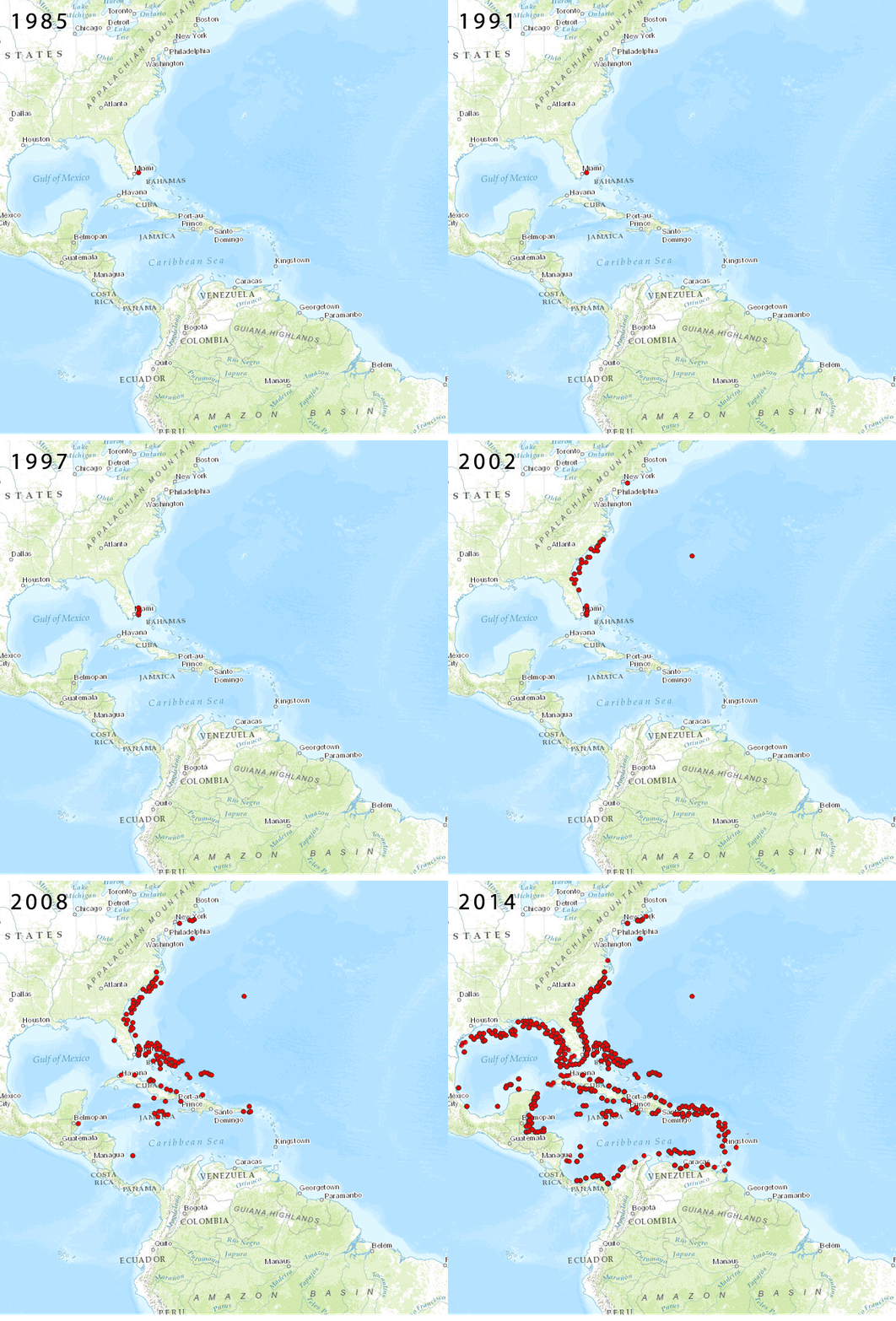
The spread of lionfish throughout the Atlantic Ocean, Caribbean Sea and Belize is being monitored by ECOMAR and our partners.  In December 2008 after the first lionfish was observed in Belize, ECOMAR raised the alarm and in partnership with the Belize Fisheries Department began educating stakeholders by distributing Lionfish Toolkits that included posters, dip nets and fact sheets. In 2010 ECOMAR partnered with COMPACT and GCFI to increase project activities and to reach a wider audience. In 2011 ECOMAR continued its outreach campaign with the production of many materials with one common message, "Eat Lionfish!"
Picture

Picture

Why Lionfish Pose a Threat

Lionfish are an introduced, or invasive, tropical marine fish that is originally native to the Indo-Pacific Ocean, but have now become part of the marine life throughout the Wider Caribbean and Atlantic Ocean.  

The problem is that lionfish are eating all of our native reef fish and scientists are very concerned that our already stressed fisheries and coral reef ecosystems will become even more stressed if lionfish are not kept in control.  

Our goal is to manage lionfish by overfishing them, and eating them!  Divers and fishermen are catching them to eat and selling them to restaurnats. They taste like any other fish and make great ceviche, fried fish, fish balls, soup or tacos!   
Picture
Lionfish at The Elbow, Turneffe Atoll. Photo Linda Searle

The Belize Lionfish Project:
A Local Response to a Regional Problem

ECOMAR and the Belize Fisheries Department work with stakeholders in Belize to manage the invasive lionfish, which is slated to negatively impact the Belize Barrier Reef World Heritage Site, thereby impacting the livelihoods of fishermen and marine guides who make a livlihood from the reef. 

Project funded by COMPACT and GCFI. Produced by Richard & Carol Foster from Wildlife Film Productions in Belize. 22 minutes.
Destination Belize 2012 Article on the Invasive Lionfish

For more information on the magazine of Belize, visit www.destinationbelize.com

Cooking Show Appearances

Radisson Cooking Show

Grace Cooking Show


Waterproof Boat Stickers

Picture
Picture
Picture
Picture

Contact Details

Picture
PO Box 1234
Belize City, Belize
TEL: + (501) 223-3022
CEL: + (501) 671-3483
Email: linda@ecomarbelize.org

Like us on Facebook!

Picture